Garden Shed Door Access: What to Check Before Buying
Plan garden shed door access before ordering. Compare clear openings, single and double doors, thresholds, routes and storage layouts.

Garden shed door access is easy to overlook when comparing buildings. A shed may have enough floor area for everything you own, yet still be awkward to use if the opening is too narrow, the threshold is high or the door swings into the space you need for storage. Thinking about access before ordering can save a lot of frustration later.
This guide explains how to assess door width, positioning, thresholds and everyday movement around a UK garden shed. It is a planning checklist rather than a claim about the dimensions or fittings of any particular model: always confirm the specification on the product listing.
Write down the largest items you expect to move in and out. A lawnmower, bicycle, wheelbarrow, workbench or bulky garden furniture may require more clearance than boxes and hand tools.
Compare these measurements with the clear opening, not simply the advertised door-leaf size. Frames, hinges, stops and hardware can reduce usable space. If a listing does not show the clear opening, ask before ordering.
A single door may suit a compact shed used for gardening tools and smaller storage. It also leaves more uninterrupted wall space for shelving, depending on the layout.
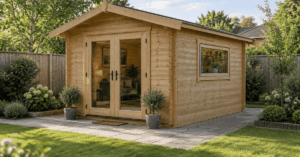
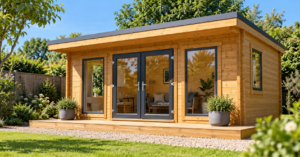
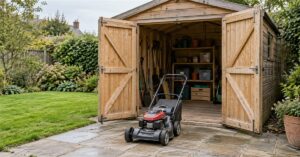
Double doors can make moving wider objects more convenient, especially when you need to steer a mower or move a workbench. However, check whether both leaves open fully, how they are secured and whether the surrounding garden gives them enough swing space.
Do not assume every double-door arrangement offers the same clear width. The central meeting point, frame and catches all affect access. Compare actual dimensions and photographs for the exact product.
A small step can be a significant nuisance when moving a loaded wheelbarrow, mower or mobility equipment. Look at the height and shape of the doorway threshold and the finished floor level.
Where a ramp is being considered, assess its slope, surface, width, stability and how it will be secured. A loose board is not a reliable substitute for a properly designed access solution. For heavier equipment or accessibility needs, seek advice on a suitable design and safe loading arrangement.
Also check that the ground immediately outside the entrance is firm, reasonably level and drains well. A puddle or muddy patch at the doorway makes access unpleasant and can increase the amount of moisture carried inside.
Picture the journey from the house or gate to the shed. A door that faces a fence, narrow path or planting bed may look fine in a catalogue but feel restrictive in daily use.
Before finalising the position, read our guide to space around a garden building and the garden building delivery access checklist. Delivery access and day-to-day doorway access are separate considerations, and both matter.
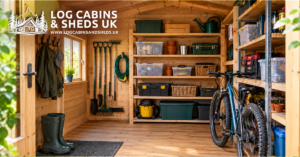
Storage often expands to fill every available wall. It is tempting to install shelves beside the door or stack bags immediately inside, but these can narrow the practical route through the shed.
Sketch a simple plan showing the door swing, the largest stored items and a clear route to anything used regularly. Reserve an easy-access area for frequently used tools. Store occasional items deeper inside or higher up only where they can be reached safely.
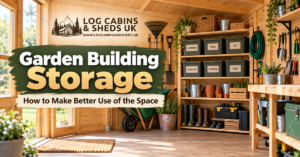
Our garden building storage guide has more ideas for organising equipment without sacrificing usable floor space.
Doors are exposed to regular handling and the British weather. Before buying, check what hinges, latches, handles and locking arrangements are included with the specific shed. Product packages vary, so do not assume that a lock or security upgrade is supplied.
Consider whether the entrance faces prevailing wind and rain, and whether nearby planting may obstruct opening as it grows. Follow the manufacturer’s guidance on timber treatment, maintenance and door adjustment. Timber can respond to changing moisture conditions, making periodic inspection sensible.
Security also depends on the wider setting. Good lighting, a visible route from the house and appropriate storage choices can complement suitable door hardware. Avoid leaving high-value equipment visible through windows.
Door access is only one part of selecting a shed. Check the external footprint, internal usable dimensions, roof height, floor specification, window positions and any assembly requirements. A building with a wide entrance may still be awkward if the inside layout leaves no turning room.
If bicycles are your main priority, see our guide to choosing a shed for bike storage. For broader buying considerations, our shed ordering checklist covers the questions worth asking.
Log Cabins and Sheds UK supplies garden buildings across mainland UK, including wooden sheds, log cabins and summer houses. Its UK-based customer support can help with product, specification and delivery questions. Check the exact model’s door arrangement and dimensions before ordering, and prepare a suitable solid, level base before assembly.
The best doorway is one you barely notice: equipment moves in and out comfortably, doors open without obstruction and your storage layout remains practical. Measure first, check the exact product details and plan the route through the garden before committing to a size or design.
Ready to compare options? Explore the garden shed range at Log Cabins & Sheds UK and check the individual listings for door arrangements, dimensions and package details. If an important measurement is missing, enquire before ordering.