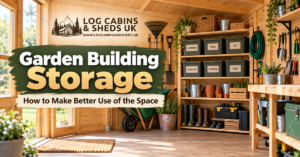
Garden Building Storage: How to Keep a Cabin or Shed Organised
Plan practical garden building storage with zones, shelving, wall space and moisture-aware organisation for a tidier cabin, shed or garden room.

A garden building can lose useful floor space surprisingly quickly. Tools collect by the door, boxes creep into walkways and items that were meant to be easy to find end up stacked behind something else.
The answer is not simply adding more shelves. Good garden building storage starts by deciding what the space is for, what needs frequent access and what should not be stored in a potentially cold or damp environment.
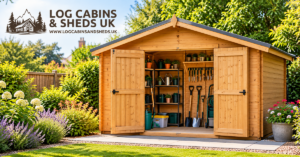
A dedicated storage shed can use most of its walls for shelving and hooks. A garden room, hobby cabin or home office needs a different balance because storage must coexist with seating, desks or leisure space.
Start by dividing belongings into everyday, occasional and seasonal groups. Everyday items belong within easy reach. Seasonal equipment can use higher shelves or deeper storage, while rarely used belongings should earn their space rather than remaining indefinitely.
Grouping similar items makes a small building easier to use. Garden tools can occupy one wall, DIY equipment another area and leisure accessories a separate cupboard or shelf. Leave a clear route from the door to anything you use regularly.
Wall-mounted hooks, rails and shelving can free valuable floor area, but fixings need to suit the construction of the building and the load being supported. Heavy storage should not be attached to thin lining materials without suitable structural support.
If you are planning a new building, think about storage before deciding the final layout. Door and window positions determine how much uninterrupted wall space remains. Our guide to choosing the right door position for a garden building explains why access and furniture layout are worth considering early.
Very deep shelving can become a hiding place for smaller items. Measure the boxes, tools or equipment you want to store and choose shelf depth accordingly. Adjustable shelving gives more flexibility when your needs change.
Transparent or clearly labelled containers can make small items easier to locate. Avoid filling every shelf completely; a little spare capacity makes it easier to put things away rather than starting another pile on the floor.
Garden buildings experience different temperature and humidity conditions from the main house. Avoid placing moisture-sensitive possessions directly against a cold wall or on a floor where they could be affected by damp.
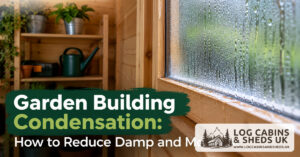
Air movement matters too. Packing boxes tightly from floor to ceiling can restrict ventilation around stored items. Our garden building condensation guide covers practical ways to reduce moisture and improve ventilation.
Outdoor equipment is not always clean and dry when it comes back inside. A small entrance zone with a durable mat, boot storage and somewhere to hang damp outerwear can stop moisture and dirt spreading through the building.
Allow wet items to dry before sealing them inside enclosed boxes or cupboards. Where appropriate, keep gardening chemicals, fuels and other hazardous materials in accordance with their product instructions and away from children and pets.
If your garden building is heated, storage should not obstruct heaters, vents or the clearances specified by the appliance manufacturer. Do not drape clothing or stack boxes against a heater.
For more cold-weather planning, see our garden building heating guide.
Storage works best when it changes with the way you use the building. A quick spring and autumn review is a good opportunity to remove unwanted items, check for signs of moisture, inspect shelves and fixings and move seasonal equipment into the most convenient positions.
Think beyond the external dimensions. Door position, windows, usable wall length and the activities you want to accommodate all affect how practical the finished interior will be. Explore the garden buildings available from Log Cabins & Sheds UK and plan the internal layout around how you expect to use the space.