Garden Shed Ventilation: How to Reduce Condensation
Reduce garden shed condensation with practical ventilation, storage and moisture-control tips for tools, bikes and everyday garden equipment.

Garden shed condensation is a common problem when moisture becomes trapped inside a closed building. It can show up as water droplets on windows, damp patches, musty smells or moisture on tools and stored items.
Ventilation is one of the simplest ways to reduce the problem. The aim is to help damp air escape and allow fresher air to move through the shed without leaving everything exposed to the weather.
Condensation happens when warm, moisture-laden air meets a colder surface. In a garden shed, that can be a window, roof panel, metal tool or another cold surface.
Moisture can enter in several ways: wet garden tools, damp bikes, muddy equipment, rain carried in on clothing, moisture rising from the ground or simply humid outdoor air.
Before blaming every damp patch on condensation, inspect the building for obvious water entry.
Ventilation will not solve a leak, so deal with water ingress first.
A closed shed can trap humid air for long periods. Fixed vents can help by allowing continuous air movement even when the doors and windows are shut.
Where suitable, placing vents at different heights or on opposite sides of the building can encourage air to move through the space. The exact position depends on the shed design, layout and how it is used.
If your shed has opening windows, use them when conditions are dry and secure enough to do so. Even short periods of ventilation can help release trapped moisture after wet equipment has been stored.
Do not rely on leaving windows open permanently. Security and weather protection still matter.
One of the easiest ways to reduce indoor moisture is to avoid putting very wet items straight into a closed shed.
The less moisture you bring inside, the less the building has to deal with.
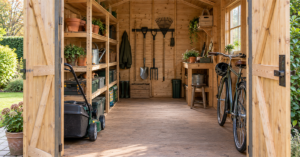
Packing boxes, tools and furniture tightly against shed walls can restrict airflow. Leave a small gap where practical so air can circulate around stored items.
This is particularly useful for cardboard boxes, timber items and anything that can absorb moisture.
Good storage helps as much as it organises. Shelving keeps items off the floor and makes it easier for air to move around the shed.
Our guide on how to plan storage inside a garden shed covers practical ways to use shelving, wall space and zones more effectively.
A shed installed on a poorly prepared or persistently wet area is more likely to have moisture problems. The base should be suitable for the building and allow water to drain away from the structure.
When choosing a new garden building, plan the base and surrounding drainage before installation rather than trying to correct a damp location afterwards.
Moisture matters because it affects what you keep inside the shed. Bikes, tools, fixings and metal equipment all benefit from a drier, better-aired environment.
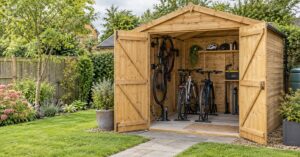
If bike storage is your priority, see our guide to choosing a garden shed for bike storage for more advice on space, doors, layout and security.
Ventilation is easier to plan when you already know what the shed will hold. A building used mainly for dry hand tools has different needs from one that regularly stores bikes, lawn equipment and wet gardening gear.
Think about access, windows, shelving, floor area and ventilation together before buying.
From our experience supplying garden buildings across mainland UK, moisture control works best when it is considered alongside the building base, internal layout and intended use. A solid, level and suitable base should be prepared before installation, while storage should leave enough space for air to circulate around tools, bikes and other equipment. Our UK-based team can also help with product, specification and delivery questions when you are choosing a shed for practical storage.
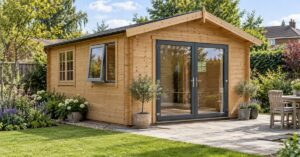
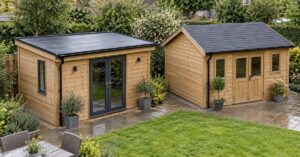
Log Cabins and Sheds UK offers a range of garden buildings for storage, hobbies and everyday garden use. If you are comparing sheds, think beyond external size and consider the internal layout, door access and how you will manage moisture once the building is in use.
Visit Log Cabins and Sheds UK to browse the range and plan a building that suits your garden and storage needs.