How to Plan Storage Inside a Garden Shed
Make better use of your garden shed with a practical storage plan for tools, bikes, shelving and everyday garden equipment.

A garden shed can hold an impressive amount of equipment, but only when the space is planned properly. Without a simple storage layout, useful floor area quickly disappears beneath lawnmowers, tools, bikes, plant pots and boxes.
The best time to think about shed storage is before you fill it. Whether you are choosing a new shed or reorganising an existing one, a few practical decisions can make the building easier to use throughout the year.
Before buying shelving or hooks, make a list of the main items that will live in the shed. Grouping them by size and how often they are used makes it easier to decide where everything should go.
This simple inventory also helps when choosing the size and style of a new shed. A building that technically fits everything can still be frustrating if there is no usable route through the middle.
Think about how often each item comes out of the shed. Equipment used every week should be easy to reach without moving three other things first.
Seasonal or rarely used items can sit higher up or towards the back, while everyday tools should have a convenient home near the door or main working area.
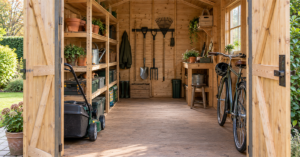
Vertical storage is one of the easiest ways to free up floor space. Suitable shelving can hold smaller items, while properly fitted hooks or racks can organise tools that would otherwise lean against walls.
Keep the weight and fixing requirements of anything wall-mounted in mind. The appropriate solution depends on the construction of the shed and the item being stored, so avoid overloading walls or using unsuitable fixings.
A shed should be easy to enter and move around in. Leave a sensible walkway from the door to the items you use most frequently.
If you regularly wheel a lawnmower, bicycle or other bulky equipment in and out, plan its route before positioning shelves or storage boxes. Door width and door position can be just as important as the overall footprint of the building.
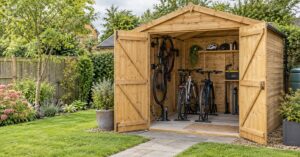
Bicycles take up more room than expected because handlebars and pedals overlap other stored items. If bike storage is a priority, consider how many bikes need to fit and whether they must remain immediately accessible.
A dedicated bike store or a shed with a layout suited to wider equipment may be a better choice than trying to squeeze bikes around garden machinery and tools.
Dividing the shed into simple zones makes it easier to keep organised. You might have one area for garden tools, another for machinery and another for smaller supplies.
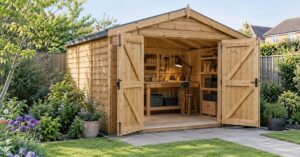
If the shed doubles as a small workshop or potting area, keep the working surface clear and position regularly used tools within easy reach. Storage above or beneath a bench can help without taking over the workspace.
Try to avoid covering every part of the floor with loose boxes. Stackable containers can make better use of height, but make sure they remain stable and that heavier items are stored sensibly.
Keeping some floor space clear also makes routine cleaning and checking the inside of the building much easier.
Do not pack belongings so tightly against every surface that you can no longer inspect the inside of the shed. Leaving sensible access helps you spot maintenance issues and keeps doors, windows and ventilation points unobstructed.
Garden tools should also be cleaned and dried appropriately before storage. Damp equipment and wet materials can make an enclosed storage space harder to keep in good condition.
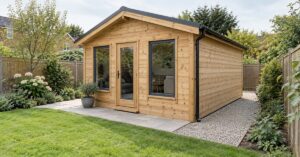
If you are buying a new garden shed, start with the contents rather than choosing solely by the external dimensions. Think about door access, window position, internal wall space and the amount of clear floor area you need.
Browse our garden sheds and compare the available designs with the equipment you want to store. Planning the layout before ordering can help you choose a building that works for everyday use instead of simply providing somewhere to put things.
A well-organised shed saves time because equipment has a proper place and the items you need are easy to reach. Start with your largest belongings, protect a clear route through the building and then use suitable wall and shelf storage for smaller items.
Explore the garden building range at Log Cabins & Sheds UK to find a shed that gives your tools, bikes and outdoor equipment the space they need.