Garden Building Condensation: How to Reduce Damp and Moisture
Learn how to reduce garden building condensation with practical advice on ventilation, moisture sources, insulation, storage and seasonal maintenance.

Condensation inside a garden building is a sign that warm, moisture-laden air is meeting a colder surface. In a shed, log cabin or garden room, that surface is often glazing, a metal fitting or a poorly insulated section of the structure. The answer is not simply to turn the heating up: ventilation, moisture sources and how the building is used all matter.
Air can hold water vapour. When warm humid air cools against a cold surface, some of that vapour can condense into water droplets. This is why windows are often the first place you notice the problem in colder weather.
Everyday activities can add moisture. Wet coats, muddy boots, damp gardening equipment, people working for long periods and even drying items indoors can raise humidity.
A garden building needs a sensible route for stale, moist air to leave and fresh air to enter. Blocking every vent in winter may make the room feel warmer for a short time, but it can also trap moisture.
Condensation and rainwater ingress are different problems. If one area remains wet regardless of occupancy or indoor humidity, inspect the roof covering, seals, glazing, gutters where fitted and the external timber finish.
Our seasonal log cabin maintenance checklist covers regular checks that can help you spot weather-related issues early.
If a garden room is used regularly through colder months, insulation can help reduce very cold internal surfaces and make heating more effective. The appropriate specification depends on the building’s construction and intended use.
Heating should be planned as part of the whole room rather than used to mask a moisture problem. See our guide to garden building heating for practical planning points around insulation, ventilation and electrical supply.
Small habits make a difference. Avoid storing wet garden furniture cushions, dripping tools or soaked clothing in a closed building. If the cabin is used as a gym, hobby room or office, air it after periods of occupancy.
A dehumidifier can help control indoor humidity in suitable circumstances, but it should not be treated as a substitute for fixing leaks or providing appropriate ventilation. Follow the manufacturer’s instructions and ensure any electrical equipment is suitable for the environment.
Cardboard boxes, fabrics and papers can suffer if they sit against a cold or damp wall. Shelving and storage should allow airflow and keep moisture-sensitive belongings off the floor where practical.
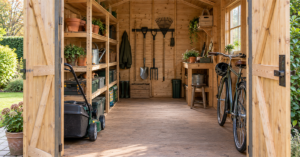
If storage is the main purpose of your building, our guide to planning storage inside a garden shed offers ideas for organising tools, bikes and everyday equipment.
Regular surface condensation should prompt you to review ventilation and moisture levels. Persistent damp patches, mould growth or timber that remains wet need closer investigation. Find the cause rather than repeatedly painting over the symptom.
A lightly used storage shed has different heating and ventilation needs from a garden office occupied for hours each day. When choosing a new garden building, consider glazing, ventilation, insulation options, storage layout and how often the doors will be opened.
A well-planned building is easier to keep comfortable and easier to maintain. Browse the garden buildings available from Log Cabins & Sheds UK and compare layouts, sizes and specifications against the way you intend to use the space.