Garden Cabin Rainwater Drainage: Protect Your Timber Building
Practical UK advice on garden cabin rainwater drainage, roof runoff, gutters, downpipes, bases and protecting timber from excess moisture.

Garden cabin rainwater drainage is easy to overlook when choosing a timber building. Yet the route rain takes from the roof to the ground can make a real difference to how dry and easy to maintain a shed or log cabin remains.
Rain is unavoidable in a UK garden, but standing water against timber, splashback from hard surfaces and overflowing gutters can shorten the life of a building’s finish. Good rainwater planning is about moving water away from the roof and base while allowing the surrounding ground to drain. It starts before a cabin or shed is installed.
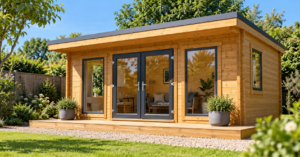
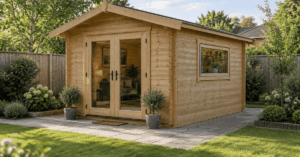
An apex roof usually sheds water towards two eaves, while a pent roof directs most runoff towards one lower edge. Think about what sits below each edge: a path, planting bed, fence, neighbouring boundary or door. Avoid directing concentrated water onto a neighbour’s land or into a place where it will pool against the building. Roof covering and manufacturer guidance affect which gutter profiles and fixing methods are suitable.
Guttering can help collect roof runoff rather than letting it splash along the cabin walls. Measure the roof edge and check whether there is room for brackets without interfering with the roof covering or trim. Downpipes should discharge to a suitable drainage arrangement, not simply onto the timber base or immediately beside the wall. Keep access for clearing leaves, moss and debris.
A level, stable base supports the building, but the surrounding garden should encourage surface water to move away from it. Avoid raising soil or paving so high that it bridges the building’s timber elements or traps moisture. Consider local ground conditions, nearby slopes and how water behaves during heavy rain. Our guide to garden cabin bases explores why preparation matters.
A soakaway or other drainage feature may be appropriate in some gardens, but suitability depends on soil permeability, groundwater, available space and relevant local requirements. Do not assume that every property can accept a soakaway. If runoff is substantial, ground is persistently wet or drainage would affect a boundary, seek advice from a competent drainage professional before digging.
Watch for rain bouncing from paving onto lower wall boards, especially around doors and corners. Keep vegetation and stored items away from the walls so air can circulate and surfaces can dry. Maintain suitable timber treatment in line with the supplier’s instructions, and check seals and external joints as part of routine inspections. Window position and glazing choices can also influence how exposed an opening is to wind-driven rain.
After heavy rain, look for overflowing gutter sections, puddles close to the base, blocked outlets and wet areas that take a long time to dry. Autumn leaves can fill gutters surprisingly quickly. During colder weather, check that outlets are not blocked by ice or debris. Early maintenance is generally easier than repairing repeated water damage.
Roof style, access for maintenance and where the cabin sits on the plot all affect drainage choices. Compare building dimensions and roof arrangements before ordering, then plan the base and rainwater route as one project. Browse the range at Log Cabins & Sheds UK to find a garden building suited to your space.