Log Cabin Roof Coverings: Felt, Shingles and EPDM Compared
Compare felt, bitumen shingles and EPDM for garden cabin roofs, including roof pitch, installation, drainage and maintenance considerations.

A garden cabin roof does more than finish the appearance of the building. It protects the timber below from persistent rain, wind-driven moisture and seasonal temperature changes. When comparing log cabins or replacing an ageing roof covering, buyers often see options such as mineral felt, bitumen shingles and EPDM rubber. Each has strengths, but none is automatically right for every roof. The pitch, roof deck, drainage details and installation method are just as important as the material itself.
Before comparing prices, check the minimum roof pitch permitted by the covering manufacturer and the building supplier. A product suitable for a steeper pitched roof may be unsuitable for a shallow roof where water drains more slowly. The roof deck must also be sound, correctly supported and prepared to accept the chosen system. Follow the cabin manufacturer’s requirements because changing the covering can affect warranties, fixing methods and the overall roof load.
Mineral-surfaced bituminous felt is widely used on garden buildings and is often an economical option. Its performance depends on the grade of felt, overlaps, edge detailing and how carefully it is installed. Basic shed felt should not be assumed to perform like a higher-specification roofing system. Pay particular attention to the ridge, eaves and corners, where poor detailing can allow water to track underneath. Regular visual checks help identify lifted edges or wear before water reaches the timber.
Roof shingles can create an attractive tiled effect on suitable pitched cabin roofs. They are supplied in overlapping pieces and generally need an appropriate roof deck and a pitch within the product’s specified range. Shingles are not a universal substitute for felt on very low-pitch roofs. Their fixing pattern, starter course, ridge treatment and ventilation requirements must be followed carefully. Choose the colour with the cabin’s surroundings in mind, but prioritise the technical specification over appearance.
EPDM is a synthetic rubber roofing membrane often selected for suitable low-slope roofs. It can provide a relatively continuous waterproof surface with fewer field joints, depending on roof dimensions and installation design. That does not mean installation is foolproof: substrate preparation, adhesives, trims, penetrations and drainage details are critical. Some cabin roofs may require design changes or a compatible deck before EPDM is appropriate. Confirm the complete system with a competent installer or supplier rather than buying membrane by area alone.
A lower purchase price can be appealing, but a meaningful comparison includes underlay where required, trims, fixings, adhesives, waste, installation time and expected maintenance. Product warranties differ and often depend on correct installation and use. Avoid assuming a fixed lifespan for every felt, shingle or rubber roof, because quality, exposure and detailing vary. Ask for the exact product specification and the installation instructions so you can compare like with like.
Even a well-chosen roof covering can suffer if leaves and debris block the route for rainwater. Gutters and downpipes should carry water away from the building and its base, rather than allowing it to splash repeatedly onto the lower wall timbers. Nearby trees can increase the need for cleaning and inspections. Our garden cabin rainwater drainage guide explains why the roof and ground conditions should be considered together.
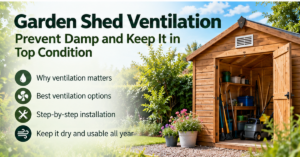
Water droplets inside a garden building do not always mean the roof covering has failed. Warm, moisture-laden air can condense on cold surfaces, particularly in an unheated building with limited airflow. Inspect the location and timing of damp patches before assuming a leak. Ventilation, stored items, ground moisture and how the cabin is used all affect internal humidity. Our guide to shed ventilation and damp offers useful background checks.
Ask the supplier which roof coverings are included, which upgrades are compatible, what pitch the roof has and whether the roof deck needs additional preparation. Clarify how the edges, ridge, roof penetrations and guttering will be finished. Check whether the proposed covering changes delivery requirements, installation costs or guarantees. If you are still selecting the building, our questions to ask before ordering a garden shed provides a wider purchasing checklist.
Inspect the roof from ground level after severe weather and during routine garden maintenance. Look for loose edges, obvious tears, displaced shingles, blocked gutters and signs of water staining inside. Do not climb onto a garden building roof unless it is specifically designed to support access and appropriate safety arrangements are in place. Keep records of the covering used and any repairs, particularly while a warranty applies. The best roof is a compatible, properly installed system that you can inspect and maintain over time.