Garden Building Roof Coverings: Felt, Shingles or EPDM?
Compare felt, shingles and EPDM garden building roof coverings, including pitch, package contents, guttering, installation and maintenance questions.

A garden shed for bike storage should make every ride easier: open the doors, wheel the right bike out and go. The wrong layout can leave handlebars tangled, tyres blocking the entrance and helmets buried behind garden tools. Before choosing a shed, measure the bikes, plan the route and decide how each item will be stored and secured.
Start with every bike that needs a home, including children’s bikes, folding bikes and occasional-use cycles. Measure the longest bike, the widest handlebars and the greatest height. If you remove a front wheel or fold a bike for storage, test whether that is a routine you will realistically follow after every ride.
Think ahead as well. A child’s replacement bike, a partner’s cycle or a future e-bike can change the space required. Allow room for helmets, pumps, locks, cleaning products and a small repair kit without using the floor area needed to wheel bikes in and out.
The advertised footprint is not the same as clear storage space. Compare the exact internal dimensions, door opening and any framing or bracing shown in the current product specification. Then mark the space on the ground and use a bike to rehearse the layout.
Our garden shed buying checklist covers the wider questions to ask about dimensions, packages and installation before ordering.
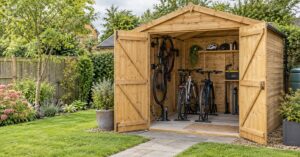
Double doors can make access easier for several bikes, particularly when handlebars are wide or the approach is not straight. A single door may still work for a smaller collection, but rely on the stated opening measurement rather than the nominal width of the shed.
Look at the full route from pavement or drive to storage position. Measure gates, narrow paths and tight turns, and check that an open shed door will not block the approach. A high threshold can be awkward with a heavy cycle, so confirm the product detail and decide whether an appropriate removable ramp or other solution is needed. Our garden building delivery access guide can help you assess the wider route before the building arrives.
Floor stands are straightforward and keep lifting to a minimum, but they use more floor space. Wall hooks can free the centre of the shed, although every fixing must suit the building and be installed in a location approved for the load. Never assume a thin board or decorative panel can carry a bicycle.
For several bikes, try alternating the direction of the handlebars or storing suitable bikes vertically. Keep the bike used most often nearest the door. Place helmets and lightweight accessories on a shelf, while cleaning liquids and sharp tools should be stored safely and according to their instructions.
A level, stable base prepared for the chosen shed helps doors operate as intended and supports an orderly interior. Ask what floor is included or available and whether it suits your intended storage and fixings. E-bikes can be heavier than standard cycles, so include the full collection when discussing floor loading and handling.
Leave practical room outside for assembly, timber treatment and future maintenance. Our guide to space around a garden building explains why the gap between the shed and nearby fences, walls or planting matters.
A locked shed door is only one part of bike security. Cycling UK advises separately securing bikes inside sheds or garages to a wall or floor anchor fixed to a strong solid surface, ideally concrete rather than a thin timber wall. Its home bike storage and security guide also recommends checking that your arrangements meet the exact conditions of your insurance policy.
Consider the door, hinges and exposed fixings as a complete system. The national police-backed Secured by Design home security advice also recommends property marking for valuable bikes and tools stored in outbuildings. Record frame numbers, retain receipts and photographs, and check your insurer’s current requirements for the building, locks and internal anchor.
No shed can guarantee that a bike will not be stolen. The aim is to combine a suitable building, appropriate hardware, internal locking and sensible record keeping rather than relying on one feature.
Store bikes dry and allow wet tyres and clothing to drain before packing the shed tightly. Keep ventilation openings clear and inspect the roof, doors and base regularly for signs of water entry. Do not crowd damp kit against timber walls.
If you store an e-bike, follow the battery and charger manufacturer’s safety instructions. Any permanent electrical supply should be designed and installed by a competent registered electrician; do not turn a trailing extension lead into a permanent charging arrangement. Keep the route to the doors clear rather than surrounding batteries or chargers with combustible storage.
From our experience supplying garden buildings across mainland UK, bike storage works best when the shed is chosen around the full routine rather than the advertised footprint alone. Customers should compare usable internal dimensions, door access and the available garden space, while also allowing room for a solid, level base and future maintenance around the building.
Our range includes wooden sheds in different sizes and specifications, and our UK-based customer support can help with product, specification and delivery questions. Before ordering, measure the bikes, access route and available base area so the building can be matched to the way it will actually be used.
Before buying, picture the complete journey: wheel the bike through the garden, open the shed, secure it to its anchor, store the helmet and retrieve it again. A layout that works smoothly is more valuable than spare floor area that cannot be reached.
At Log Cabins and Sheds UK, we supply wooden garden buildings across mainland UK and can help with product, specification and delivery questions. Browse our garden sheds, then contact us with your bike count, available dimensions and access details so you can compare suitable options.
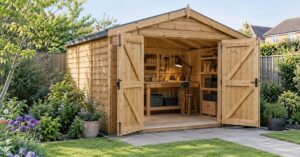
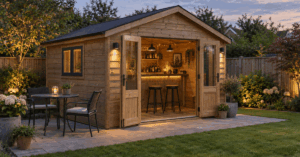
Featured image: AI-generated bike-storage shed concept, not a specific sold model. The bicycles, racks, security fittings, accessories and landscaping are illustrative additions.