Garden Bar Lighting Ideas: A Practical UK Planning Guide
Plan garden bar lighting with practical UK advice on ambient and task lights, outdoor fittings, electrical safety, paths and neighbour considerations.

Garden bar lighting can turn a simple timber building into a welcoming evening retreat. This practical UK guide covers task lights, warm ambience, outdoor safety, electrical planning and considerate lighting around neighbours.
A garden bar needs more than one bright ceiling lamp. Think about how people will move between the serving counter, seating and garden path, and where drinks will be prepared. A small pub shed may need practical task lighting behind the bar, softer light around seating and a safe route back to the house. Draw a simple plan before choosing fittings so every light has a clear purpose.
Ambient lighting provides general visibility without making the space feel harsh. Task lighting helps with pouring drinks, reading labels and cleaning worktops. Accent lighting highlights shelves, timber features or a serving hatch. Combining these layers gives you flexibility for a quiet evening or a lively gathering. Avoid placing strong lamps where they shine directly into guests’ eyes.
Garden buildings can experience condensation and changes in temperature, even when they are insulated. External lights and fittings exposed to moisture need appropriate protection for their location. An IP rating describes resistance to dust and water under specified conditions, but the correct rating depends on exposure and installation details. Ask a competent electrician to specify equipment rather than relying on a generic claim that a product is waterproof.
Plan sockets, switching and cable routes before lining the walls or fitting shelves. Electrical installations in garden buildings must be designed and installed safely, taking account of the supply, earthing, protection and environmental conditions. Work may fall under building regulations requirements. Do not run an ordinary extension lead permanently across the lawn or improvise concealed wiring. A qualified electrician can advise on an appropriate installation and testing.
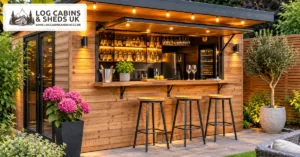
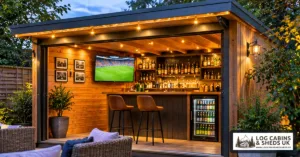
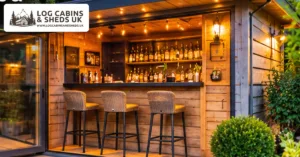
Under-shelf lighting can illuminate bottles and glasses while leaving the counter clear. Consider whether light strips will reflect off glossy surfaces or create glare at seated eye level. A warm, even wash often works better than intense spotlights. Keep fittings and wiring away from spills and cleaning areas unless they are specifically designed for that exposure. Leave access for maintenance and replacement.
Warm white light can create a relaxed pub atmosphere, while a more neutral light may be useful for preparation and cleaning. Coloured decorative lighting can add personality, but it should not be the only source of usable light. If you choose smart or colour-changing fittings, check that basic controls remain straightforward for guests. A simple wall switch can be valuable when a phone app or wireless connection is unavailable.
Paths, steps and changes in level need particular attention after dark. Position lights so people can see obstacles without being dazzled. Consider neighbouring properties when choosing brightness, direction and operating hours. Motion-activated lighting may be practical on access routes, while low-level fittings can help define edges. Outdoor cables and fixtures need suitable protection from weather, gardening tools and accidental damage.
A hatch can make a compact bar feel connected to the patio, but its lighting needs planning. A small sheltered fitting may illuminate the counter without shining into the garden. Check where the hatch opens and whether it will obstruct a wall light or cable. Our garden bar serving hatch guide explores practical layouts and weather protection.
Separate switches for task, ambient and outdoor lighting make the space easier to manage. Efficient LED fittings can reduce electricity use, but check manufacturer guidance on dimmer compatibility and enclosed locations. Avoid adding more decorative lighting than the space needs. If the bar is used only occasionally, choose a setup that can be shut down clearly and safely when everyone returns indoors.
Lighting should be considered alongside insulation, ventilation, doors, glazing and the position of the serving counter. A poorly placed window may create glare by day, while limited wall space can constrain shelf lights and switches. See our pub shed size guide and pub shed budget guide when planning the overall project. Allow money for safe electrical work rather than treating it as an afterthought.
A garden bar building may fall within permitted development rules in some circumstances, but restrictions depend on location, dimensions, use and property status. Lighting itself can also affect neighbours through glare or light spill. Check the relevant planning position with your local planning authority where necessary, especially for listed buildings, designated areas or unusual uses. Do not assume every garden structure is automatically exempt from permission.
Before hosting guests, walk through the garden in darkness and check the counter, seating, steps and doorways. Look for dazzling fittings, dark corners and reflections on glazing. Confirm that switches are easy to find and that no cables create trip hazards. A thoughtful lighting scheme makes a garden bar more welcoming while keeping the practical details under control.