Planning a Potting Shed: A Practical Buyer’s Guide
Choose a practical potting workspace with advice on benches, daylight, storage, seed care and the checks to make before ordering a garden building.

Planning a potting shed is about making everyday gardening easier: somewhere to fill containers, organise empty pots and put down a tray without first moving the lawnmower. Before choosing a building, decide whether you mainly need a sheltered workbench, organised storage or a space for raising plants. Those are different jobs, and one shed will not automatically do all three.
This guide focuses on choosing and arranging a practical potting workspace, rather than assuming every garden shed is a greenhouse or a frost-free plant store.
Think through an ordinary gardening session. Where will you collect compost, fill pots, label plants and put equipment away? A useful workspace follows that sequence without sending you backwards and forwards across the garden.
Write down the tasks you want to do under cover. Repotting a few houseplants needs a different arrangement from filling large patio containers. If the same building must house a mower, measure it too: its parked position should not turn your bench into an inaccessible shelf.
Compare usable internal dimensions rather than relying only on a size in the product name. Mark out the bench, storage and doorway on a suitable floor, then practise moving between them while holding a tray. Check headroom where you will actually stand, especially beneath a sloping roof.
Bench depth matters as much as length. A deep surface may hold more pots but leave less room to move, and items at the back may become awkward to reach. Try a temporary surface at your preferred working height before buying furniture. If you need seated access, include knee room and somewhere to turn comfortably.
Browse the garden-building options in our sheds range, then ask about the exact model’s suitability for your intended use. Do not assume a bench, shelving, insulation or additional glazing comes with the building unless the listing confirms it.
Useful daylight over a bench helps with detailed tasks such as reading labels and handling small seeds. However, a bright-looking shed is not automatically suitable for growing seedlings. Consider how much light reaches the proposed work area throughout the day and what the plants you intend to grow require.
Keep a distinction between potting plants and leaving them there to grow. An ordinary unheated shed should not be treated as guaranteed frost protection. If growing space is a priority, discuss glazing, ventilation and temperature requirements before choosing the building. Avoid buying a storage shed on the assumption that it will perform like a greenhouse.
A removable potting tray can contain loose compost without requiring permanent alterations. Keep a brush and collection container nearby, and choose a bench surface that suits the work and can be cleaned according to its manufacturer’s instructions.
Plan where wet trays and watering cans will go, rather than leaving water sitting on the timber floor. Keep designed vents clear and follow the building’s ventilation and maintenance instructions. Ask the supplier before fixing shelves or heavy racks to walls; an attractive interior photograph is not evidence that a particular fixing arrangement is suitable.
Seed packets look appealing on an open shelf, but appearance is not a storage plan. The RHS guidance on collecting and storing seed explains that warmth and excess humidity can damage stored seed. For many dry seeds, it recommends labelled paper packets inside an airtight container with desiccant, with refrigerated storage; some species need different treatment.
Follow the requirements for the seeds you have rather than leaving everything in a changing shed environment. Your potting area can hold trays and labels while seeds are stored elsewhere. Equally, check the storage instructions on gardening products and keep them in their original labelled containers, away from children and pets.
Choose a position that works with your gardening routine. Consider the route to borders, outdoor water and compost supplies, as well as access for carrying bulky containers. Keep room around the building for the maintenance its instructions require.
Before ordering, obtain the exact base specification, check the proposed location with the relevant local authority where necessary, and confirm delivery and assembly arrangements. Budget separately for groundwork and your interior equipment. If you want powered lighting or sockets, arrange professional electrical advice before fitting out the space.
At Log Cabins and Sheds UK, we supply wooden sheds and other garden buildings to customers across mainland UK and help with product, specification and delivery questions. When planning a potting shed, we recommend comparing the exact usable space and building specification with the bench, storage and gardening equipment you want to accommodate, then confirming the base and delivery requirements before ordering.
Good planning means the building serves your gardening, rather than becoming another place to pile things. Compare your shortlist against the same essentials: internal working room, daylight, access, storage, base requirements and package contents.
Explore our sheds range, then contact Log Cabins and Sheds UK with your available space, preferred building and a sketch of your potting setup. Ask us about the listed specifications and what is included before you order, so your next garden building starts with a clear, practical brief.
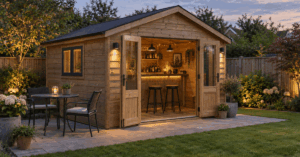
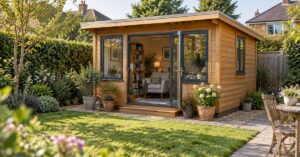
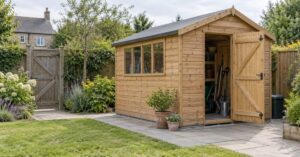
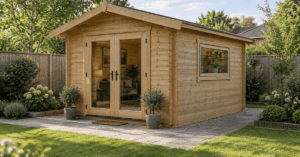
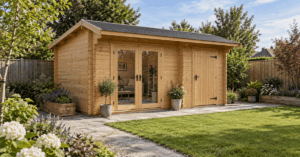
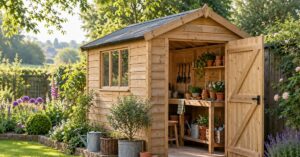
Featured image: AI-generated potting-shed concept for inspiration. It does not depict a specific sold model; the bench, tools, planting and accessories are illustrative additions.