Garden Room vs Log Cabin: Which Is Right for Your Garden?
Compare garden rooms and log cabins for insulation, cost, foundations, maintenance, planning and year-round use before choosing your garden building.

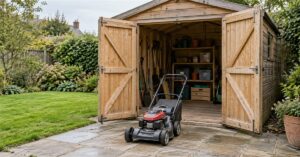
A garden shed often holds more value than it appears to from the outside. Bikes, power tools, lawnmowers and gardening equipment can quickly add up, yet the building itself may have a simple door latch and little thought given to visibility or access. Good garden shed security is not about making a timber building impossible to enter. It is about choosing sensible features, reducing obvious weaknesses and making theft less convenient.
The right approach depends on what you store, where the shed sits and how often you use it. A small store for plant pots needs a different level of protection from a workshop containing expensive tools. Consider the whole setup before buying extra locks.
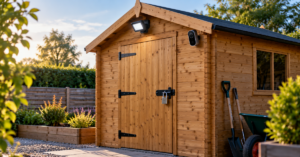
Door design matters because it is the point most people use every day. Look at how the door closes, how the frame supports it and whether the hinges and fittings feel suitable for regular use. A secure lock is less effective if the surrounding timber is weak or the door can be easily forced away from its frame.
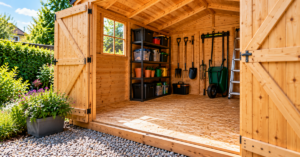
Think about whether a single or double door works best for the items you need to move. Double doors can make access easier for bulky equipment, but both leaves should close securely. Our guide to garden shed door access explains how to plan openings around the equipment you will store.
There is no single lock that suits every shed. The important point is to match the hardware to the door and frame. A robust hasp and staple, correctly fixed into sound material, may be appropriate for some timber sheds. Other buildings may be better suited to an integrated locking system. Check the manufacturer’s guidance before drilling into doors or fitting heavy hardware.
Hinges deserve the same attention as the lock. Exposed fittings can be vulnerable if screws are easy to remove. Security hinges or suitable additional fixings may improve a compatible door, but the installation should not damage the timber or interfere with normal movement. Use corrosion-resistant fittings where they will be exposed to the weather.
A shed hidden completely behind tall hedges may feel private, but it can also give an intruder cover. Where possible, balance privacy with natural surveillance from the house or a frequently used part of the garden. Good sightlines and a clear path can make the building easier to monitor and safer to access in winter.
Positioning should also allow enough room to open the doors and maintain the walls. Avoid planting shrubs tightly against the structure, as they can hide damage and make maintenance difficult. Do not block emergency routes or create a trip hazard with improvised barriers.
Consider what someone can see through a window or an open door. Tools and bikes displayed in full view may attract attention. Shelving, closed storage cabinets and a tidy layout can keep items organised without advertising the contents. If you are still planning the interior, see our article on storage inside a garden shed.
Where practical, use a separately secured cabinet or suitable ground anchor for higher-value items. The correct solution depends on the floor construction and the item’s weight, so check that fixings are compatible with the building and do not compromise its base or weatherproofing.
Motion-activated lighting may make access easier and draw attention to unexpected activity. Position lights so they illuminate the approach without shining into neighbouring windows. If you install a camera, consider privacy, power, connectivity and where recordings will be stored. A camera is not a substitute for sound doors and locks.
Battery-operated devices can be convenient where there is no mains supply, but batteries need checking and replacing. If you want permanent electrical work in a garden building, use a suitably qualified electrician and plan the cable route safely.
Security and maintenance are closely connected. A door that swells and sticks in wet weather may stop latching properly. Rotten timber around hinges or a damaged frame can make otherwise good hardware ineffective. Inspect the building regularly, keep suitable protective finishes maintained and deal with leaks before they cause structural damage.
Pay particular attention to the base, roof edges, door threshold and places where water collects. A stable, level foundation helps doors remain aligned over time. It is worth addressing these practical details before spending money on complicated security accessories.
Do not assume everything in an outbuilding is automatically covered under your home insurance. Policies differ on outbuilding limits, valuables, locks, theft conditions and whether there must be evidence of forced entry. Check your own policy wording and ask your insurer when anything is unclear.
Keep receipts, photographs and serial numbers for valuable tools or equipment in a secure place away from the shed. Marking property and maintaining an inventory may help if something goes missing. These steps are useful even when you already have strong physical security.
Log Cabins and Sheds UK supplies timber garden buildings to customers across mainland UK, including sheds, log cabins, garages and summer houses. In practice, security starts with choosing a building and layout that suit what will be stored, then keeping doors, fittings and the surrounding area maintained so weaknesses do not develop unnoticed.
Our customer support team can also help with product specification questions before purchase, including door layouts and practical options available on selected garden buildings.
Garden shed security works best when it is considered alongside size, door position, flooring, storage and long-term maintenance. A building that is easy to use and keep in good condition is more likely to remain properly closed and locked day after day.
Explore the shed and garden building options at Log Cabins & Sheds UK and think about the equipment you want to protect before deciding which features matter most. Good security begins with a sensible building and consistent everyday habits.