Garden Building Roof Coverings: Felt, Shingles or EPDM?
Compare felt, shingles and EPDM garden building roof coverings, including pitch, package contents, guttering, installation and maintenance questions.

Garden building roof coverings affect appearance, installation, drainage and future maintenance, so they deserve more attention than a last-minute tick box. Felt, shingles and EPDM can all be appropriate in the right specification. The key is matching the covering to the exact building, roof pitch, package and installation instructions rather than choosing by looks alone.
Two cabins that look similar may have different roof designs or covering packages. Check the live product listing for the precise size and configuration you intend to order. Confirm whether the covering is included, offered as an option or must be sourced separately.
Do not assume a photograph shows every component in the delivered package. Our questions to ask before ordering a garden shed guide explains why package contents should be checked in writing.
Roofing felt is familiar on garden sheds and can be a straightforward choice when it is specified for the building. However, “felt” is a broad description rather than a complete specification. Ask what product is supplied, how it should be fixed, what overlaps and edge details are required, and whether any separate underlay or adhesive is needed.
Inspect felt roofs regularly for lifted edges, damage and wear, particularly after strong winds. Any repair or replacement should use a compatible product and follow the building and covering manufacturer’s instructions. Avoid comparing options using an unverified lifespan figure, because product grade, roof preparation, exposure and installation all affect performance.
Bitumen-style shingles create a layered, tiled appearance that can suit an apex-roof cabin or shed. They are individual pieces or strips rather than one continuous sheet, so correct setting-out, overlap, fixing and ridge treatment are important.
Before selecting shingles, confirm that the roof pitch and deck are suitable for the chosen system. Check whether the package contains the quantity needed for the exact roof area, including the ridge and reasonable cutting allowance. Colour samples can also look different in bright sun and wet weather, so treat online images as a guide rather than an exact promise.
EPDM is a flexible rubber membrane commonly associated with low-pitch and pent-roof designs. A neat result depends on the complete system: the prepared roof deck, adhesives, perimeter trims, outlets and any joints or penetrations all need to be compatible and installed correctly.
Current listings show why it is important to read the specification rather than generalise. The Beausale Pent Log Cabin is currently listed with EPDM roof covering and rear guttering with a downpipe included. The Ewesdale Log Cabin is listed with EPDM roofing and optional guttering. Always recheck the live details for your chosen size before ordering.
There is no universal winner for every garden building. Make the comparison around the actual project:
A roof covering and rainwater system need to work together. Identify where water will leave the roof, whether guttering is available for that model and where a downpipe can discharge without saturating the building base or creating a nuisance at a boundary.
Keep gutters and outlets clear and leave enough room around the building for inspection. Our guide to space around a garden building explains why maintenance access and drainage checks should influence the original position.
Do not assume a garden-building roof will support a person. The Health and Safety Executive says all roofs should be treated as fragile until a competent person confirms otherwise, and that even short roof jobs require proper planning and precautions. Its roof-work safety guidance is written for construction work, but the warning is equally useful when deciding whether to use a competent installer rather than attempting unfamiliar work yourself.
Never improvise access or walk on the roof simply because the building is small. Follow the supplied installation instructions and arrange suitable help, equipment and weather conditions.
At Log Cabins and Sheds UK, we supply wooden garden buildings across mainland UK and can help with product, specification and delivery questions. Compare the roof options while you compare the building itself, then confirm exactly what is included for your chosen size.
Browse our log cabins and garden sheds, or contact us to discuss the roof package for your shortlist.
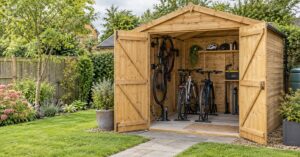
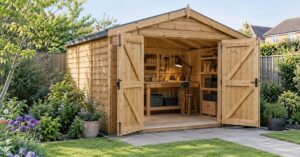
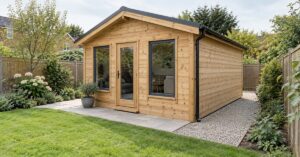
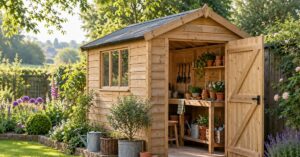
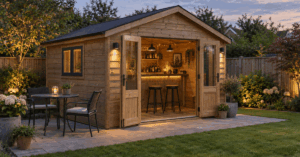
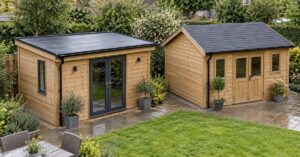
Featured image: AI-generated roof-covering comparison concept, not specific sold models. The buildings, roofing details, guttering and landscaping are illustrative additions.